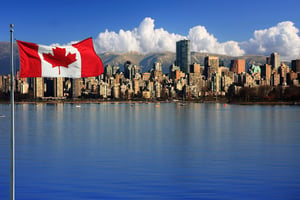
 Our neighbor to the north was recently evaluated by international anti-money-laundering organizations on its efforts to identify, prosecute, and reduce money laundering.
Money laundering is a relatively big business in Canada. According to the Criminal Intelligence Service Canada (CISC), approximately $113 billion is laundered through the country each year. To be fair, global risk advisory company Kroll reports that the U.S. Treasury estimates approximately $300 billion is laundered annually through the U.S. economy.
Cleansing dirty money in Canada is referred to as “snow-washing.” Canada’s lucrative real estate markets in Vancouver, Toronto, and cities across the country offer significant opportunity for tax evasion and money laundering through shell companies whose identities remain hidden. Shell companies and foreign bank accounts can be used for legitimate purposes, but they can also be misused to conceal the origins of illicit funds or obscure beneficial ownership. Additional information on offshore tax scenarios is available in our downloadable guide, Offshore Tax Matters Explained.
What the FATF Assessment Found
The Financial Action Task Force (FATF) and the Asia/Pacific Group on Money Laundering (APG) conducted a joint review of Canadian efforts to combat money laundering and reduce financing to terrorist organizations and other illicit activities. The APG was created in Thailand in 1997 and is funded by member countries with a mandate to identify opportunities and work to eliminate money laundering in the region.
FATF and APG initiated their review last November, with results released in September. The report includes many points, including:
-
Money laundering in Canada is associated with commercial trade fraud, tax crimes, and drug trafficking. These activities often involve well-organized criminal enterprises and a mature professional money laundering infrastructure.
-
Canada has strengthened and developed its beneficial ownership transparency since the last mutual report. That said, the report found that the collection of beneficial ownership information varies across territories and provinces. The U.S. exempted domestically created entities from federal beneficial ownership reporting requirements in 2025.
-
While Canada identifies, tracks , and prosecutes money laundering cases, problems arise with cases involving stand-alone professional money laundering operations where underlying matters cannot be effectively prosecuted.
Recommended Improvements to Canada's Anti-Money-Laundering Efforts
At the conclusion of the assessment, Canada received a list of key recommended actions that the reviewers would like to see addressed within three years. These actions include continued work on a corporate beneficial ownership framework, prioritizing investigation and prosecution of complex money laundering cases, and further developing risk-based supervision across the country.
The overall report recognized improvements in Canada’s anti-money-laundering framework while identifying areas where additional work is needed. In a statement, Finance Minister Francois-Philippe Champagne said, “Over the past year, the government has undertaken ambitious actions to ensure its AML/ATF/CPF regime remains among the strongest in the world. The report corroborates the efficacy of Canada’s legal framework, the thoroughness of operational activities, and the alignment of domestic practices with best international standards.”
Do You Have Concerns About Offshore Compliance or Tax Fraud?
The legal team at Robert J. Fedor, Esq., L.L.C., delivers strategic legal guidance needed to address tax compliance concerns, including tax evasion or payroll tax fraud. Speak with our knowledgeable tax attorneys today at 440-250-9709. We serve clients across the U.S. and internationally from our offices in Cleveland and Chicago.